
Practices in Focus
60 years, ten accreditations and generations of care at Walton Bridge Medical Centre
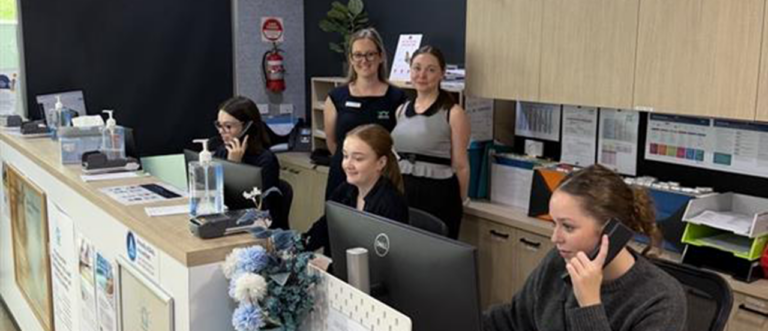
In 1966, general practice looked very different.
There were no online bookings or automated appointment reminders. No electronic health records, telehealth appointments or digital systems helping practices manage recalls and results. At Walton Bridge Medical Centre, there weren’t yet practice nurses or a dedicated practice manager.
Sixty years later, much has changed. But at the heart of this Brisbane general practice, something important has remained remarkably constant: the relationship between a trusted local healthcare team and the community it serves.
Earlier this year, Walton Bridge Medical Centre marked that enduring commitment by achieving accreditation against the RACGP Standards for general practices for the tenth time with AGPAL.
For a practice that now cares for almost 20,000 active patients and delivers around 1,300 consultations each week, ten accreditation cycles represent much more than a milestone.
For Practice Manager Lisa Tapp, the achievement reflects the commitment that has sustained Walton Bridge across generations of patients, staff and doctors.
“This is a wonderful reflection of our longevity and our ongoing commitment to our community,” Lisa says.
Growing alongside the community
Walton Bridge Medical Centre was founded in 1966 and is located in The Gap, a leafy inner-northwestern suburb of Brisbane, where its connection with the local community spans six decades.
From its beginnings as a small local general practice, Walton Bridge grew alongside the community around it. Its footprint expanded over the decades, with new consulting rooms and services added and the team evolving to meet the changing healthcare needs of local patients and families.
Today, practice partners Dr Stephen Yelland and Dr Shane Sondergeld are among those carrying that legacy forward. The practice has grown to include 16 GPs working alongside eight nurses and 14 administration and practice management team members.
The scale and sophistication of the service may be very different from 1966, but its connection with the community remains deeply rooted. Founding doctors Dr Stuart Johnston and Dr Brian Cole helped establish a legacy that has continued through successive generations of doctors, staff and patients.
Perhaps the strongest evidence of that connection comes through the practice doors every day. As Walton Bridge marks its 60th anniversary, patients have been sharing their own memories. Some have told the team they have been coming to the practice for the full 60 years.
The privilege of caring across generations
For the Walton Bridge team, longevity is not simply measured in years. It’s found in relationships.
Some doctors have cared for patients and their families over decades. Dr Marie Cox, the practice’s longest-serving current GP, has been with Walton Bridge for 36 years. That continuity is one of the things the team values most.
For Dr Yelland and Dr Sondergeld, those long-term relationships are also part of what makes general practice at Walton Bridge so meaningful. Doctors become invested not only in the care of individual patients, but in families who may continue coming to the practice across generations.
“For us, generational care is the reason why our doctors choose to practise at Walton Bridge Medical,” the team says. “They are invested, and it’s a credit to the practice if a patient’s future generations also continue to attend.
“It’s beautiful to be able to watch the community grow with us and alongside us.”
Those relationships illustrate something fundamental about general practice. A GP may care for someone through childhood, adulthood and older age, supporting them through periods of good health and illness. Over time, they may come to know their family and circumstances as well as their medical history.
Maintaining that continuity while healthcare itself has transformed has required Walton Bridge to keep changing too.
Changing the way care is delivered without changing what matters
Across six decades, Walton Bridge has seen enormous changes in both medicine and the expectations placed on general practice.
The practice has expanded its clinical team, introduced nursing roles and developed a dedicated practice management function. Doctors have increasingly developed specific areas of interest, giving patients greater opportunity to choose a GP whose expertise aligns with their needs.
Technology has also transformed the way care is delivered. Electronic records, online bookings, telehealth, digital reminders and recalls, and online requests for prescriptions and referrals are now part of everyday practice.
At their best, these changes serve a human purpose: making care safer, easier to navigate and more responsive to patients. Walton Bridge points to its systems for patient results, reminders and recalls as one example, helping patients keep track of important follow-up and supporting continuity of care.
For people managing ongoing health needs, the practice also discusses care options including health assessments and General Practice Chronic Condition Management Plans, helping patients understand and participate in their ongoing care.
Ten accreditation cycles and improvement that never stops
Against this backdrop of constant change, accreditation has provided Walton Bridge with a consistent external framework for accountability, reinforcing its ongoing commitment to quality, safety and continuous improvement.
Across ten accreditation cycles with AGPAL, that discipline has become part of the way the practice operates.
The value, the team says, is that accreditation has “kept us attentive to quality, safety and continuous quality improvement – continuously striving to be the best practice that we can be.”
That commitment is perhaps most visible in what happens between accreditation cycles.
Every week, the team meets, alternating between clinically focused and whole-of-practice meetings. Doctors, nurses and administration staff contribute ideas, identify opportunities for improvement and, importantly, follow through on agreed actions.
At Walton Bridge, quality is a shared responsibility. Bringing different parts of the practice together creates opportunities to identify what could work better and turn those conversations into practical change.
It’s an approach that recognises that safe, high-quality general practice depends on the whole team – and that improvement is never really finished. Patient needs, technology, evidence and standards continue to change, and quality must evolve with them.
Quality systems in service of people
For AGPAL, Walton Bridge Medical Centre’s tenth accreditation demonstrates the value of approaching accreditation not as a single event, but as part of a longer journey of improvement.
Successive accreditation cycles give practices an opportunity to reflect on how they work, assess their systems against recognised standards and identify opportunities to strengthen care further. Ultimately, those systems support safer care, reliable follow-up, capable teams and patients who can have confidence in the care they receive.
At Walton Bridge, those systems sit alongside something that cannot be captured by a standard or checklist. They are backed by decades of relationships and trust.
After 60 years, the team points to “the doctor and patient relationships that have been established, as well as the rapport the staff have built” as its greatest source of pride.
Walton Bridge Medical Centre today bears little resemblance operationally to the practice established in 1966. Yet the reason for doing the work remains much the same. It is about being there for people in the community when they need care.
For current practice partners Dr Yelland and Dr Sondergeld, the task now is to carry that legacy forward, preserving the relationships and continuity that have defined Walton Bridge while continuing to evolve with the needs of its patients and community.
After 60 years, ten accreditations and generations of patients, the team’s ambition for what comes next is fittingly simple. They want to continue serving their community to the highest standards of care for many more generations to come.


